


Summary
Israel says Iran’s nuclear programme has been set back by “many years” after US and Israeli strikes
It comes after a leaked US intelligence report said the attack only set back Iran’s plans “a few months, tops”
But speaking at a Nato summit, US Defence Secretary Pete Hegseth says the leaked report is “preliminary” and “low confidence”
Meanwhile, the ceasefire between Israel and Iran seems to be holding – Donald Trump says he doesn’t think “they’ll be going back at each other”
Tehran is starting to look and feel like itself, reports the BBC’s Lyse Doucet from inside Iran
Trump heads back to US after Nato summit
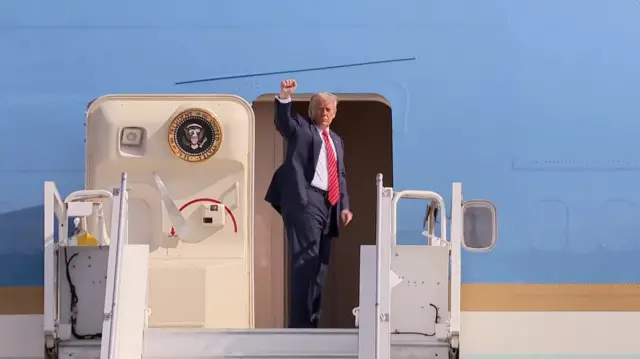
Donald Trump is heading back to Washington DC after attending the Nato summit in the Netherlands.
Gaza braces for what could come next
 Rushdi Abualouf
BBC News Gaza correspondent
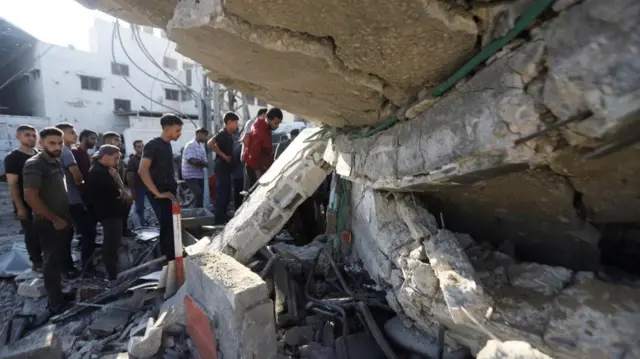 Palestinians search for casualties at the site of an overnight Israeli strike on a fuel station where displaced people shelter, in Gaza City, June 25, 2025
As the Israel-Iran war winds down, many people hope that the focus is once again turning toward Gaza, where Palestinians are split in their assessments of what the regional shift means for their besieged territory.
Some view the weakening of Iran, Hamas’s key regional backer, as a potentially positive step toward achieving a ceasefire in Gaza.
They argue that Tehran’s diminished capacity could push Hamas toward easing their positions, possibly opening the path to an agreement that has long seemed elusive.
Others, however, believe the end of hostilities with Iran will allow Israel to redirect its military focus back to Gaza.
They fear that Israeli forces, relieved from the northern front, may now intensify their ground and aerial operations in the Strip.
Since October 2023, Israel has launched a large-scale military campaign in Gaza in response to a deadly Hamas-led attack. The war has caused catastrophic destruction across the enclave and displaced the majority of its population.
Throughout the conflict, Iran has voiced strong support for Hamas and the broader “Axis of Resistance,” providing political backing and military aid.
The recent escalation between Israel and Iran, which saw direct missile exchanges and strikes on strategic facilities, diverted Israeli attention for weeks. Now, with that chapter seemingly closing, many in Gaza brace for what could come next.
Tehran is slowly looking like itself as ceasefire appears to hold
 Lyse Doucet
Chief international correspondent, reporting from Tehran
On a bright hot summer’s day, on the second day of a fragile ceasefire, Tehran is slowly starting to look like itself.
Soaring highways and tree-lined side streets are starting to fill with its infamous traffic. But many of the shops, cafes, and government offices are still shut.
Every Iranian we meet expresses enormous relief that the ceasefire is holding. But there’s great scepticism too about how long it will last.
So many in this sprawling metropolis were shaken by the attacks of the past two weeks – not just by the ferocity of Israeli and American bombs but by the fact of these unprecedented strikes in or close to residential areas.
The authorities have restored the internet to its pre-war situation. Social media apps not banned by the government, or accessed by a multitude of VPNs, are pulsing with a cascade of posts – some Iranians praising their leaders for the resistance against the Israelis and the West, others protesting about the internet restrictions and more.
It’s a debate which will go on in this defining moment when Iran is in the eyes of the world.
Lyse Doucet is being allowed to report in Iran on condition that none of her reports are used on the BBC’s Persian service. This rule from Iranian authorities applies to all international media agencies operating in Iran.


